
Deutsche Bank
German multinational investment bank founded in 1870.

via Wikipedia: Deutsche Bank · see source
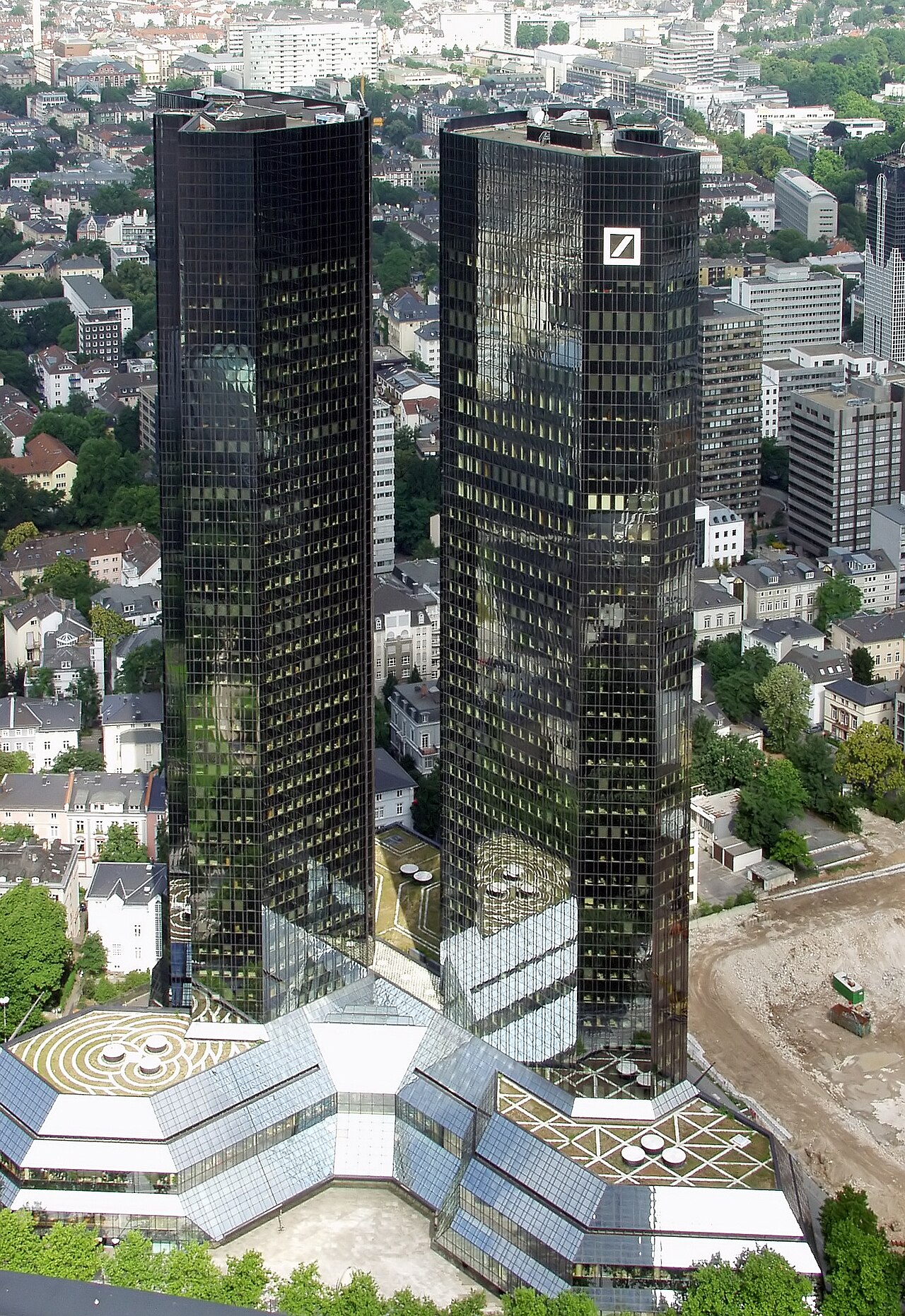
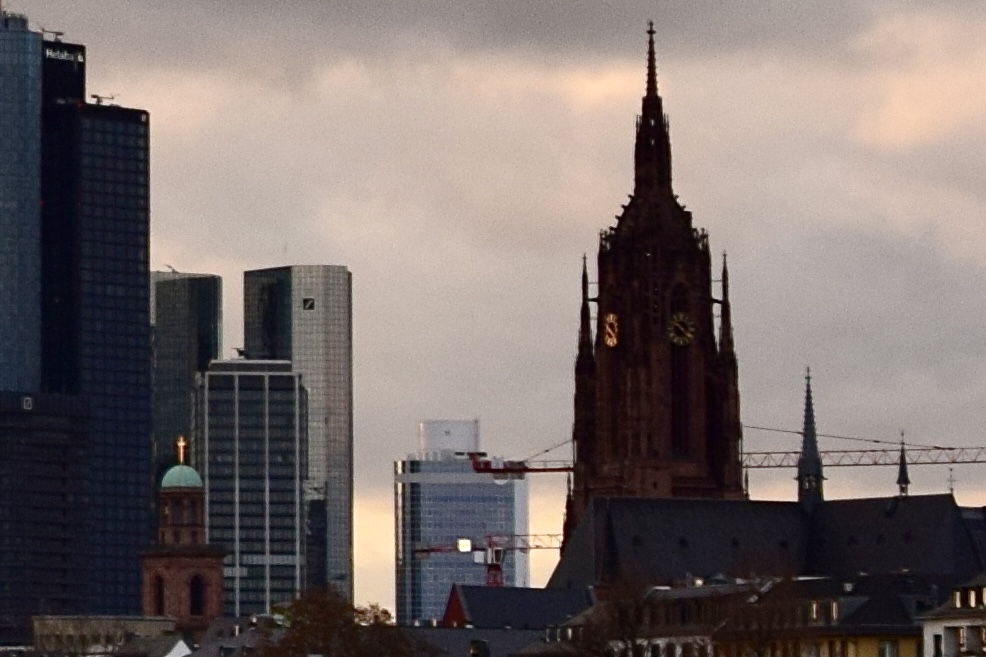
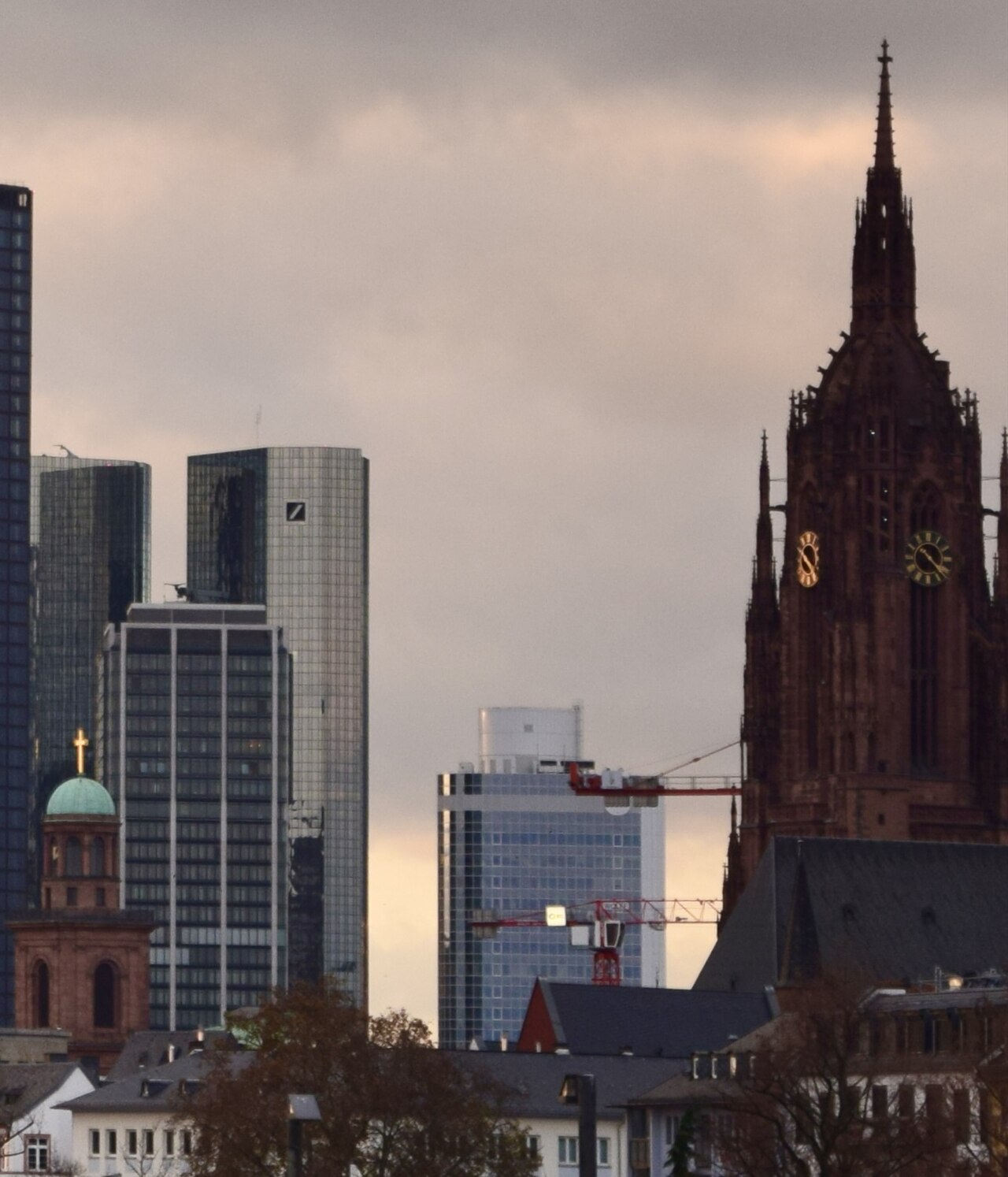
Deutsche Bank AG is a German multinational investment bank and financial services company headquartered in Frankfurt. Founded in 1870 in Berlin, it was originally established as a specialist bank for financing foreign trade and promoting German exports. It is dual-listed on the Frankfurt Stock Exchange and the New York Stock Exchange, and has been designated a global systemically important bank by the Financial Stability Board since 2011. As of 2018, its network spanned 58 countries with a large presence in Europe, the Americas, and Asia.
- founded
- 1870
- headquarters
- Frankfurt, Germany
- field
- Banking and financial services
- nationality
- German
- known_for
- Largest German banking institution; component of DAX; involvement in major scand
Verified Timeline
Lore & Background
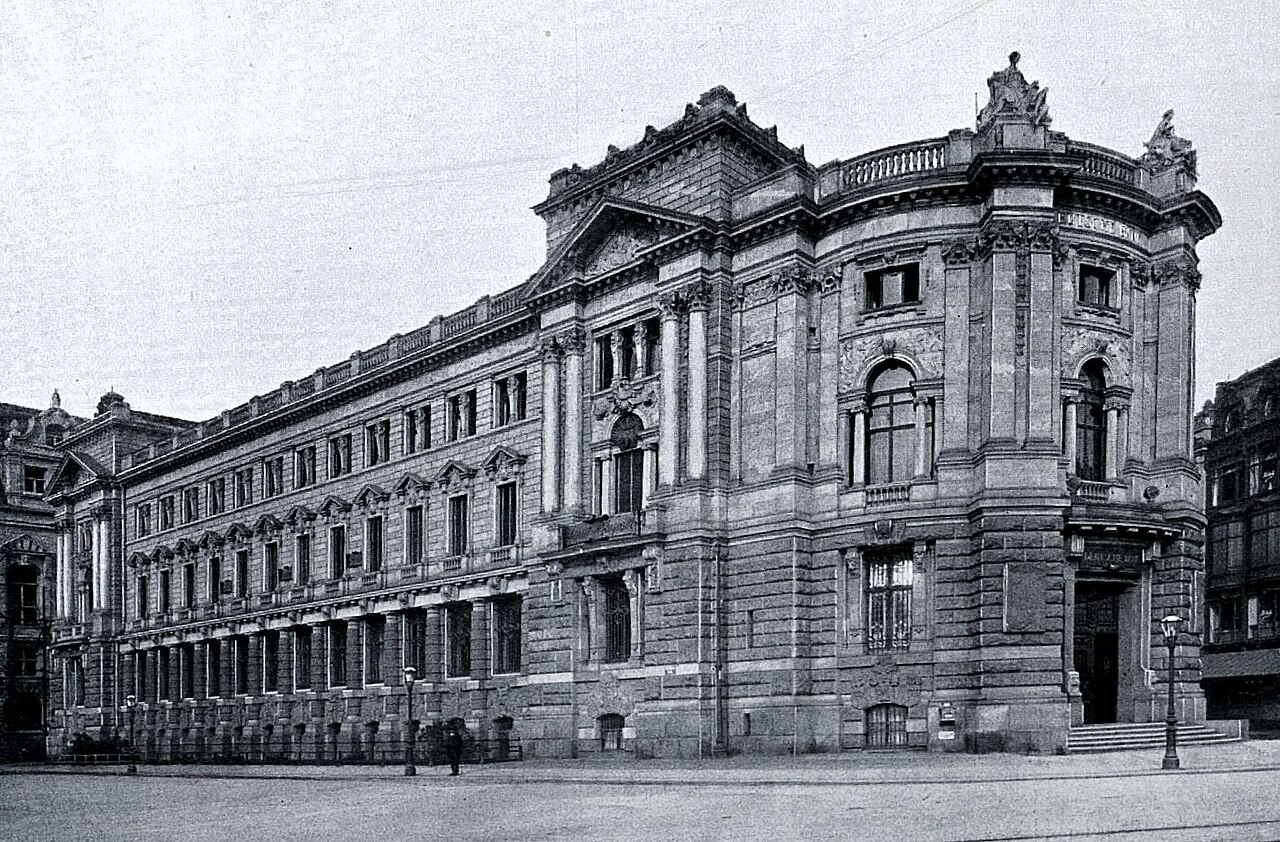
Deutsche Bank was founded in 1870 in Berlin as a specialist bank for financing foreign trade and promoting German exports. Its statute was adopted on 22 January 1870, and the Prussian government granted it a banking license on 10 March 1870. The founding members included Hermann Zwicker, Anton Adelssen, Adelbert Delbrück, and others. The first directors were Wilhelm Platenius, Georg Siemens, and Hermann Wallich. The bank initially operated from a building at 21 Französische Strasse, then moved near the Berlin Stock Exchange in 1871, and began building its head office on Mauerstrasse in 1876. From 1929 to 1937, following its merger with Disconto-Gesellschaft, it was known as Deutsche Bank und Disconto-Gesellschaft or DeDi-Bank. Other transformative acquisitions included Mendelssohn & Co. in 1938, Morgan Grenfell in 1990, Bankers Trust in 1998, and Deutsche Postbank in 2010. During the Nazi era, the bank implemented the policy of aryanization, dismissing its three Jewish management board members in 1934 and its last Jewish supervisory board member in 1938. By the end of 1938, it had been involved in at least 363 cases of expropriation of Jewish-owned businesses.
Reader's Guide
Deutsche Bank has been a central institution in German and global finance since its founding in 1870. It played a large part in developing Germany's financial services industry, financing major projects such as the Northern Pacific Railroad and the Baghdad Railway, and introducing companies like Bayer to the stock market. Its mergers and acquisitions, including the 1929 merger with Disconto-Gesellschaft and later purchases of Bankers Trust and Deutsche Postbank, shaped its evolution into a global investment bank. As of 2018, it held a majority stake in DWS Group, with combined assets of 2.2 trillion euros, forming Europe's 4th biggest asset management firm. According to S&P Global's April 2026 report, it was Europe's eighth largest bank by assets, with $1.684 trillion. However, the bank has also been marked by controversy. According to a 2020 article in the New Yorker, it had long had an 'abject' reputation among major banks, due to involvement in major scandals including money laundering, sanctions evasion, fraud, and a close business relationship with disgraced sex offender Jeffrey Epstein after JPMorgan cut him off in 2013. It has been directly supervised by the European Central Bank since 2014 as a Significant Institution.
Did You Know?
- Deutsche Bank was founded in 1870 in Berlin as a specialist bank for financing foreign trade and promoting German exports.
- From 1929 to 1937, following its merger with Disconto-Gesellschaft, it was known as Deutsche Bank und Disconto-Gesellschaft or DeDi-Bank.
- By the end of 1938, Deutsche Bank had been involved as an intermediary and lender in at least 363 cases of expropriation of Jewish-owned businesses.
- According to S&P Global's April 2026 report, Deutsche Bank is Europe's eighth largest bank by assets, with $1.684 trillion.
- A 2020 article in the New Yorker described Deutsche Bank's reputation among major banks as 'abject,' citing scandals including money laundering, sanctions evasion, fraud, and a close business relationship with Jeffrey Epstein.
A Bank Born for the World
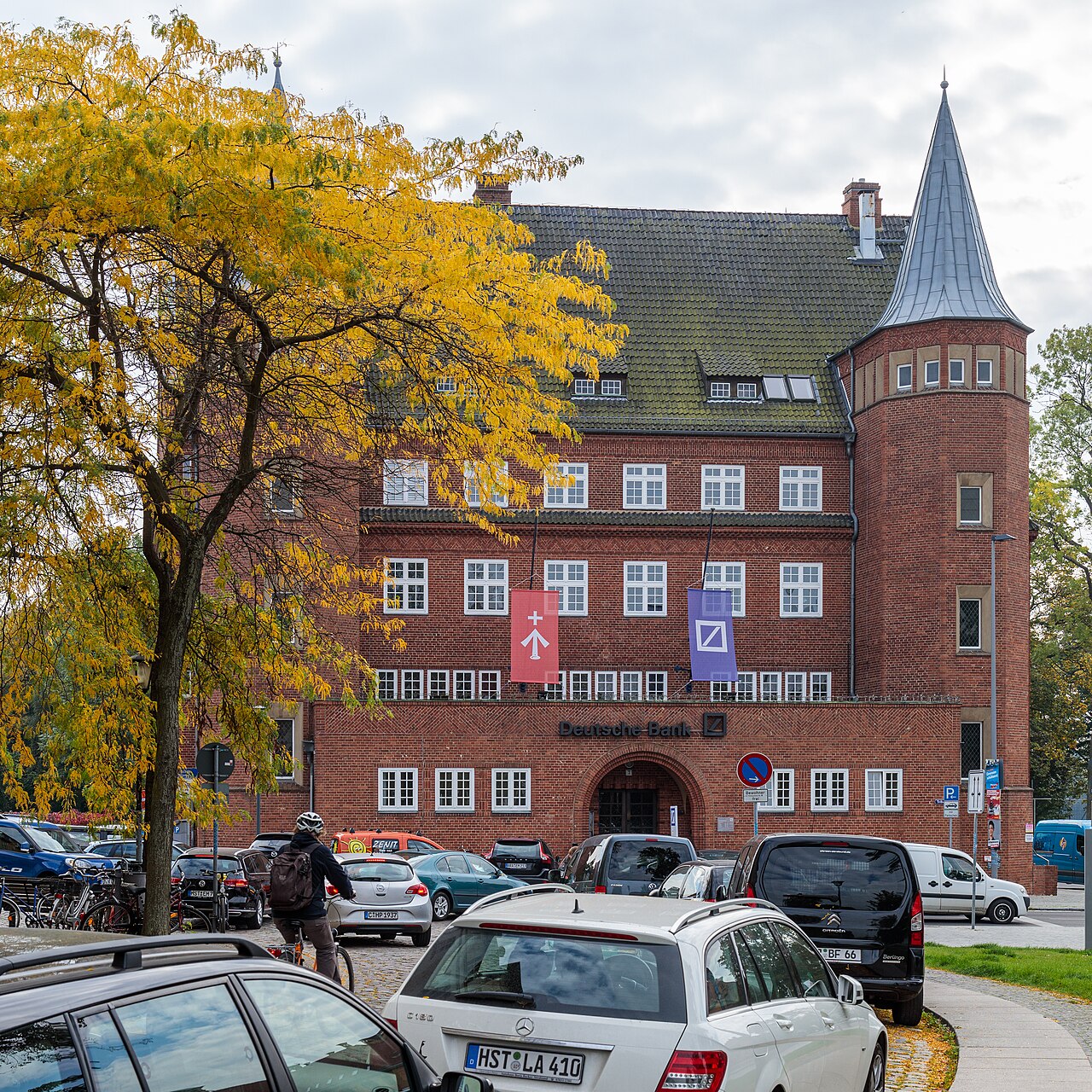
Deutsche Bank emerged in 1870 Berlin with a singular purpose: to give German merchants and manufacturers their own financial voice on the world stage. Before its founding, German importers and exporters were dependent upon British and French banking institutions, and German bills were almost unknown in international commerce, generally disliked and subject to a higher rate of discount than English or French bills. The bank's founding statute, adopted on 22 January 1870, and its Prussian banking license granted on 10 March 1870, made this mission explicit: to promote and facilitate trade relations between Germany, other European countries and overseas markets. The founding group included Hermann Zwicker, Anton Adelssen, Adelbert Delbrück, Heinrich von Hardt, Ludwig Bamberger, Victor Freiherr von Magnus, Adolph vom Rath, Gustav Kutter, and Gustav Müller. Within two years, the bank had opened offices in Shanghai and Yokohama in 1872, and by 1873 it had established a branch in London after one failure and another partially successful attempt. The first domestic branches followed in Bremen and Hamburg in 1871 and 1872.
Financing Industry, Building Empires
In its formative decades, Deutsche Bank became the financial engine behind some of Germany's most consequential industrial and infrastructure projects. It underwrote the bond offerings of steel company Krupp in 1879, helped introduce chemical company Bayer to the Berlin stock market, and provided financing for the Northern Pacific Railroad in the US and the Baghdad Railway in 1888. The bank also recognized early that specialist institutions could amplify its foreign trade mandate, participating in the creation of the Deutsch-Asiatische Bank in Shanghai in 1889, the Banca Commerciale Italiana in Milan in 1894, and the Banque Internationale de Bruxelles in 1898. Domestically, rather than building an extensive branch network from scratch, Deutsche formed community-of-interests partnerships with regional banks in the industrial heartlands—Bergisch-Märkische Bank in Elberfeld and Schlesischer Bankverein in Breslau—eventually absorbing them in 1914 and 1917. The Panic of 1873 offered an unexpected opportunity: the bank took over a number of banks in liquidation, including the Berlin-based Deutsche Union. By the end of 1908, Deutsche Bank had become the largest German joint-stock bank by total deposits, holding 489 million Marks—more than double its nearest rival Dresdner Bank at 225 million.
A Systemic Pillar of European Finance
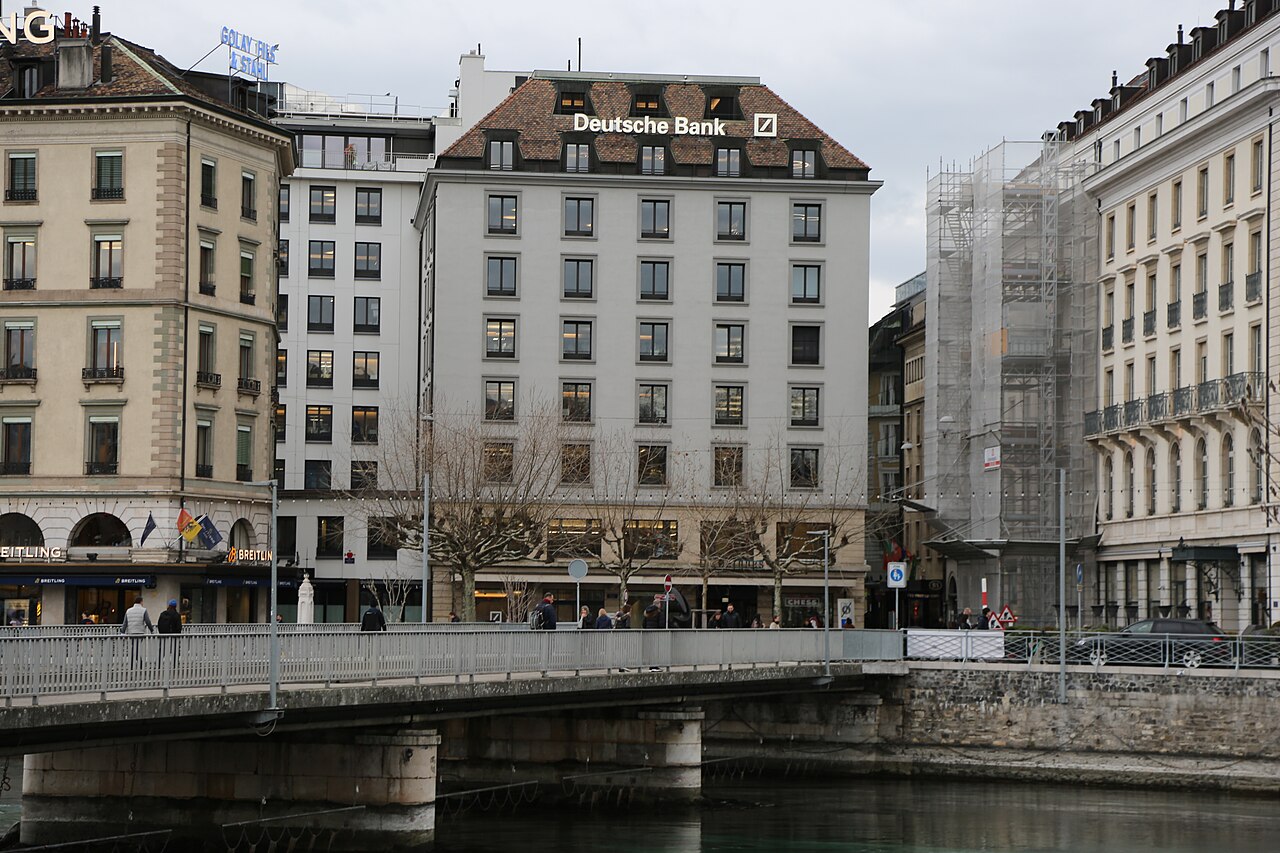
By the late twentieth and early twenty-first centuries, Deutsche Bank had transformed from a Berlin trade-finance house into one of the most interconnected financial institutions on the planet. As of 2018, its operations stretched across 58 countries, with substantial footprints in Europe, the Americas, and Asia. The bank is dual-listed on the Frankfurt Stock Exchange and the New York Stock Exchange, and it is a component of the DAX stock market index. Its majority stake in DWS Group gives it combined assets of 2.2 trillion euros, making it Europe's 4th biggest asset management firm and a rival to Sparkassen-Finanzgruppe. According to S&P Global's April 2026 assessment, Deutsche Bank holds $1.684 trillion in assets, ranking it as Europe's eighth largest bank. Its systemic weight is formally recognized: the Financial Stability Board designated it a global systemically important bank in 2011, and since European Banking Supervision took effect in late 2014, it has been classified as a Significant Institution under the direct oversight of the European Central Bank.
The Shadow of Scandal
For all its institutional heft, Deutsche Bank has carried a deeply tarnished reputation in the eyes of the financial world. A 2020 article in the New Yorker described the bank's standing among its major peers as 'abject,' a characterization rooted in a long catalogue of controversies spanning multiple domains. The institution has been implicated in major scandals including money laundering, sanctions evasion, and fraud. Perhaps most damaging to its public image was the revelation that Deutsche Bank maintained a close business relationship with Jeffrey Epstein, a disgraced sex offender, after JPMorgan cut him off in 2013. The bank's history of transformative acquisitions—Mendelssohn & Co. in 1938, Morgan Grenfell in 1990, Bankers Trust in 1998, and Deutsche Postbank in 2010—underscores its relentless growth, yet these same episodes of expansion have sometimes brought inherited liabilities and cultural mismatches into the fold.
Gallery
Frequently Asked Questions
Who is Deutsche Bank?
Deutsche Bank is a German multinational investment bank headquartered in Frankfurt, tracing its origins to a Berlin-founded trade finance house established in 1870. It is widely recognized as the largest banking institution in Germany.
What are Deutsche Bank's powers/role?
The bank operates a network spanning 58 countries across Europe, the Americas, and Asia, and is dual-listed on both the Frankfurt and New York stock exchanges. It has been classified as a global systemically important bank by the Financial Stability Board since 2011.
How does Deutsche Bank's story end?
Deutsche Bank's narrative is still ongoing; it remains an active DAX-listed institution with no definitive ending in the canon. Its current status is that of a continuing global financial player rather than a concluded arc.
Why is Deutsche Bank important?
As the largest bank in Germany and a pillar of the DAX index, it carries outsized influence over European and global markets. Its systemically important designation means regulators treat its potential failure as a threat to worldwide financial stability.
What scandals is Deutsche Bank associated with?
The institution has faced multiple high-profile controversies involving money laundering and fraud over the years. These episodes remain some of the most discussed and scrutinized chapters in its corporate history.
More in Companies And Conglomerates 1-21
Spotted an error? Know more?
This is a living reference — every entry is fact-audited, and reader corrections feed straight into our audit queue. Suggest an edit · See this site's audit record